
How to plant your Cannabis Seedlings Outdoors
Pre-step
The most important thing you can do is choose yourself a safe, secure, yet still agriculturally viable option to place your plants. Many tradeoffs will probably need to be made. In this years growth for instance, security required the plants to be placed in areas where some days they will get only 8-9 hours of direct sunlight, instead of the recommended 12-13. The need for security stems from the recency of legalization, the age of restriction making it a desirable find for youth, and price of the end product. If you feel that security is not that large of a need for your grow, and sunlight in your area is sparse, than the proper trade off would be reversed, and you would be best placing the plants where they will have the most sun during the day time to absorb all of the energy it can during the daily duration.
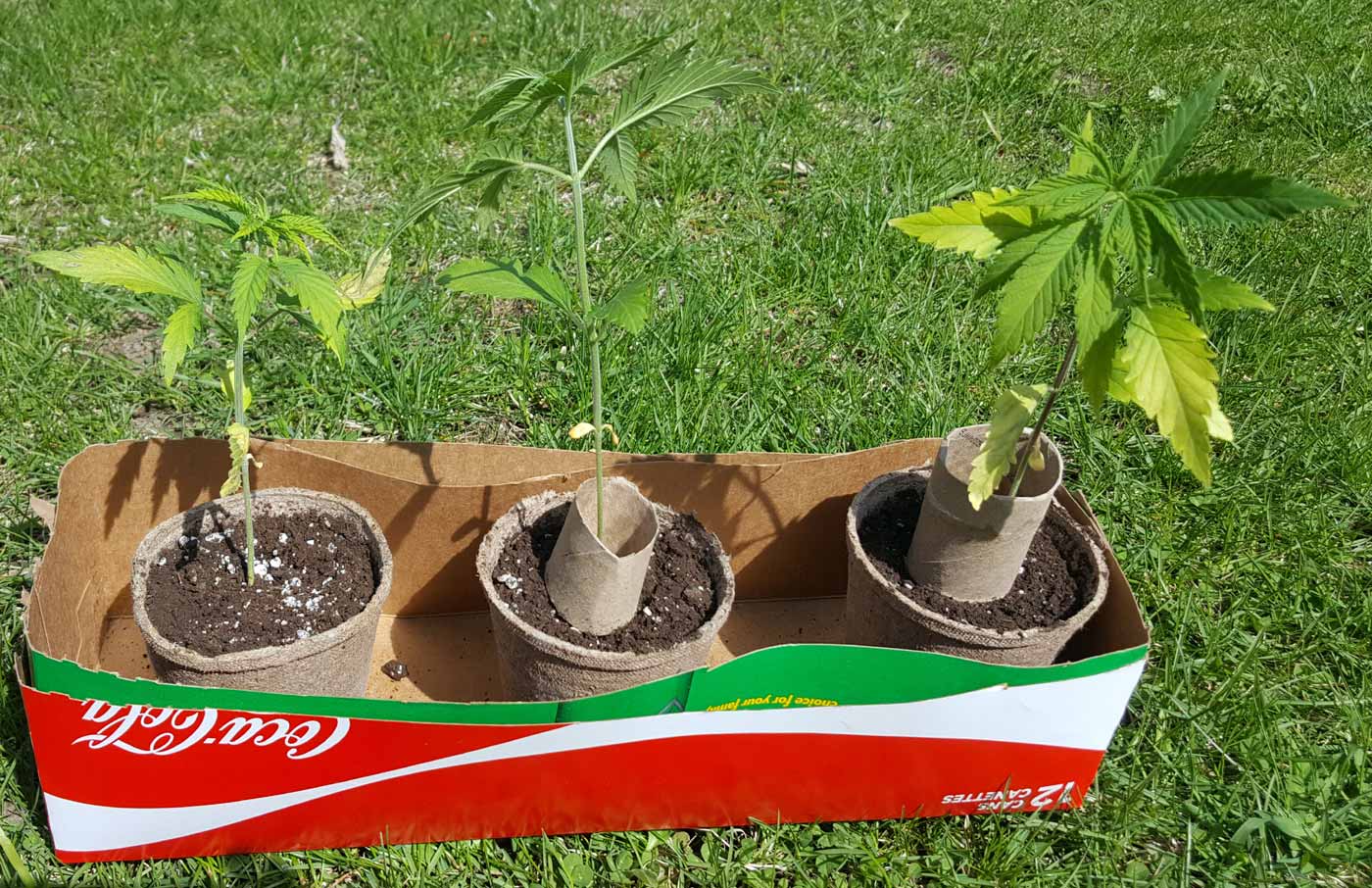
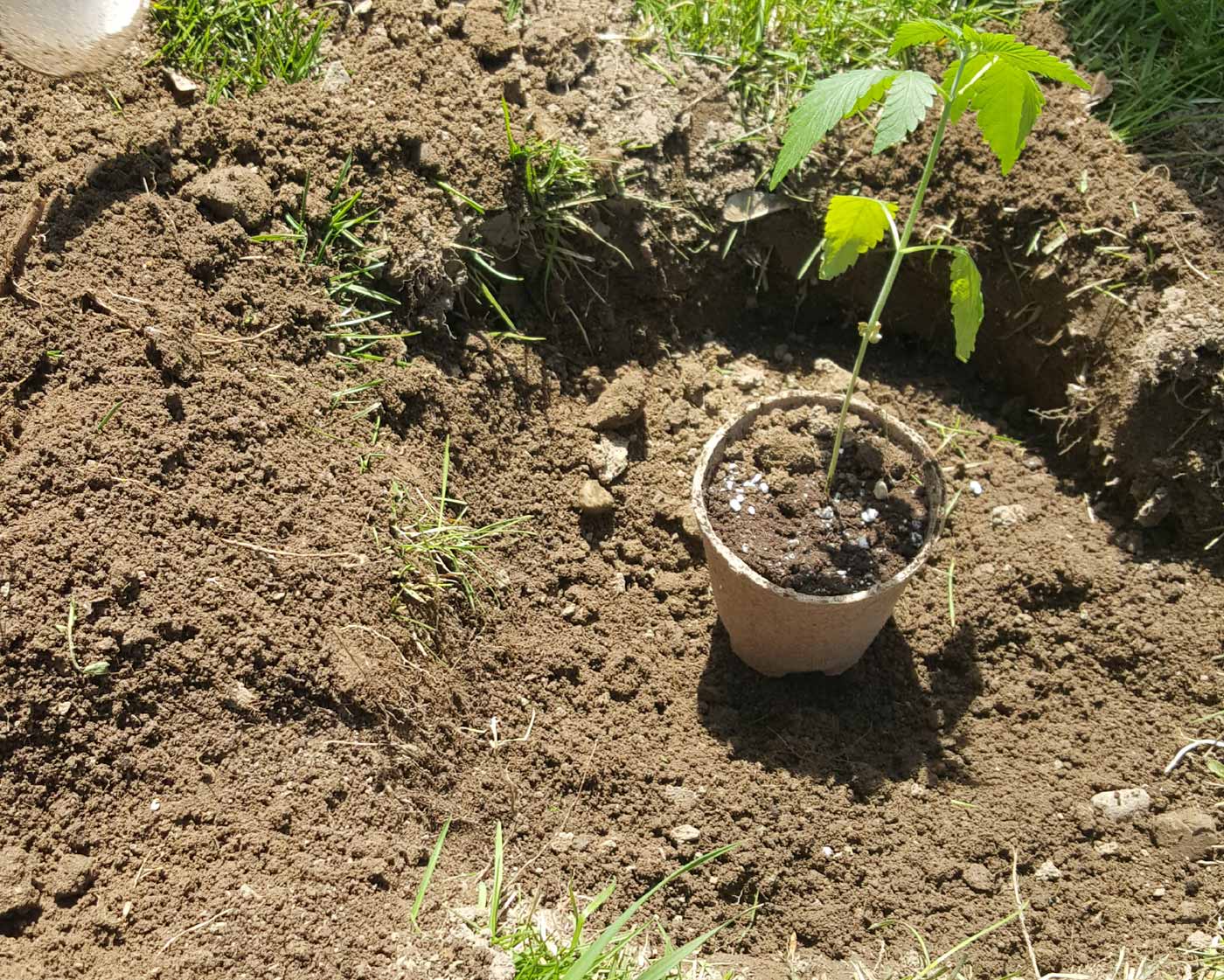
Step 1 – Hole size (3’’ x 3-1/2’’ – 4‘’)
Hole size was one that I wanted to revisit a half a month or so after planting, to see how the stem itself held with wind and pressure from side to side. After that time the plant seemed to be able to sway without harming the bottom base of the stem or shifting its dirt. Yet, with the amount of space between the ground and the first row of leaves on a lot of the plants, I would recommend a depth of about 3’’ for optimal tap root strength. As for width of the hole itself, I decided to dig about 5-1/2 to 6 inches of radius around where I wanted the plant to be coming out of. The goal was to have loose dirt for a few inches, so that the roots were able to grow and move their way through the growing medium faster and with less resistance.
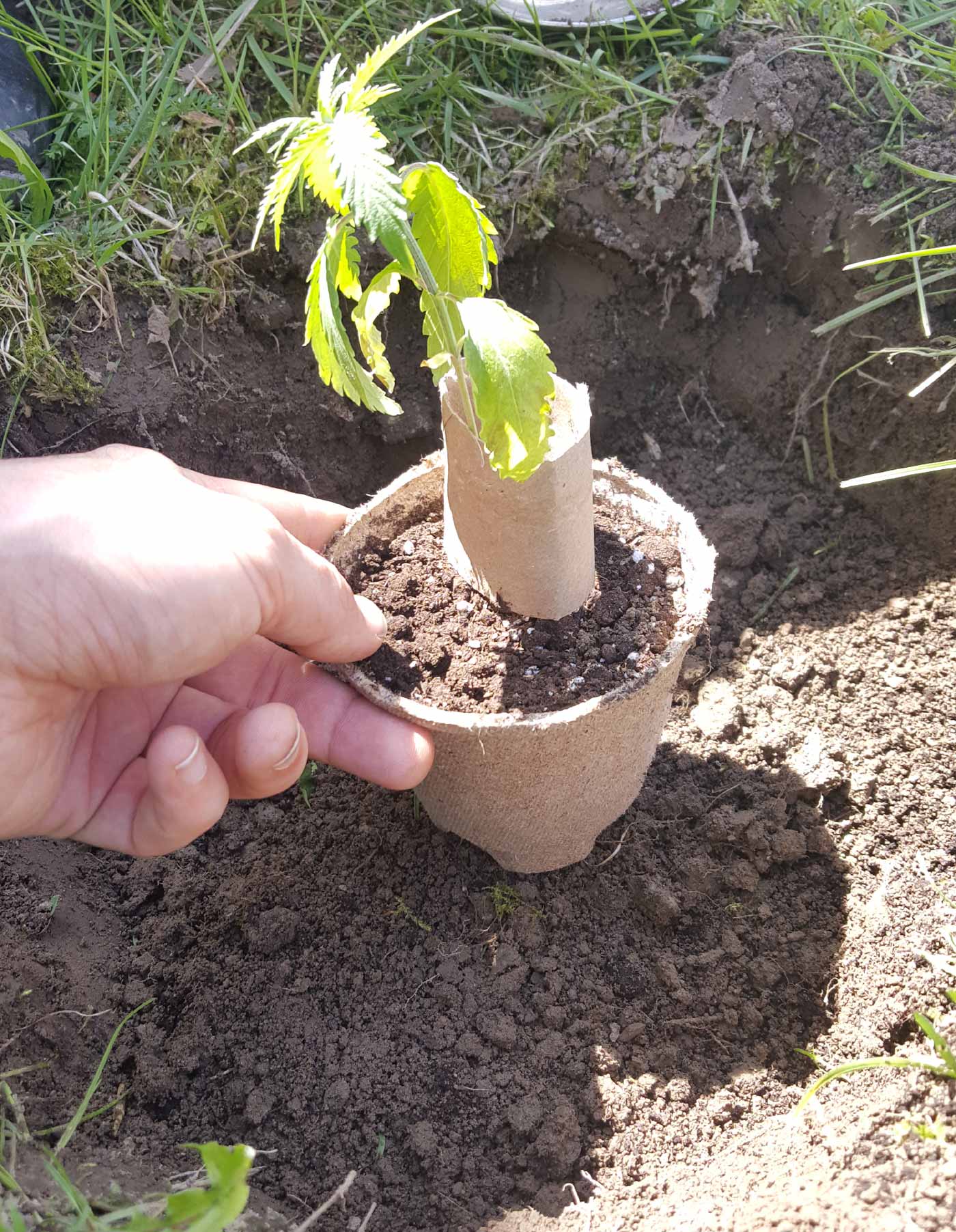
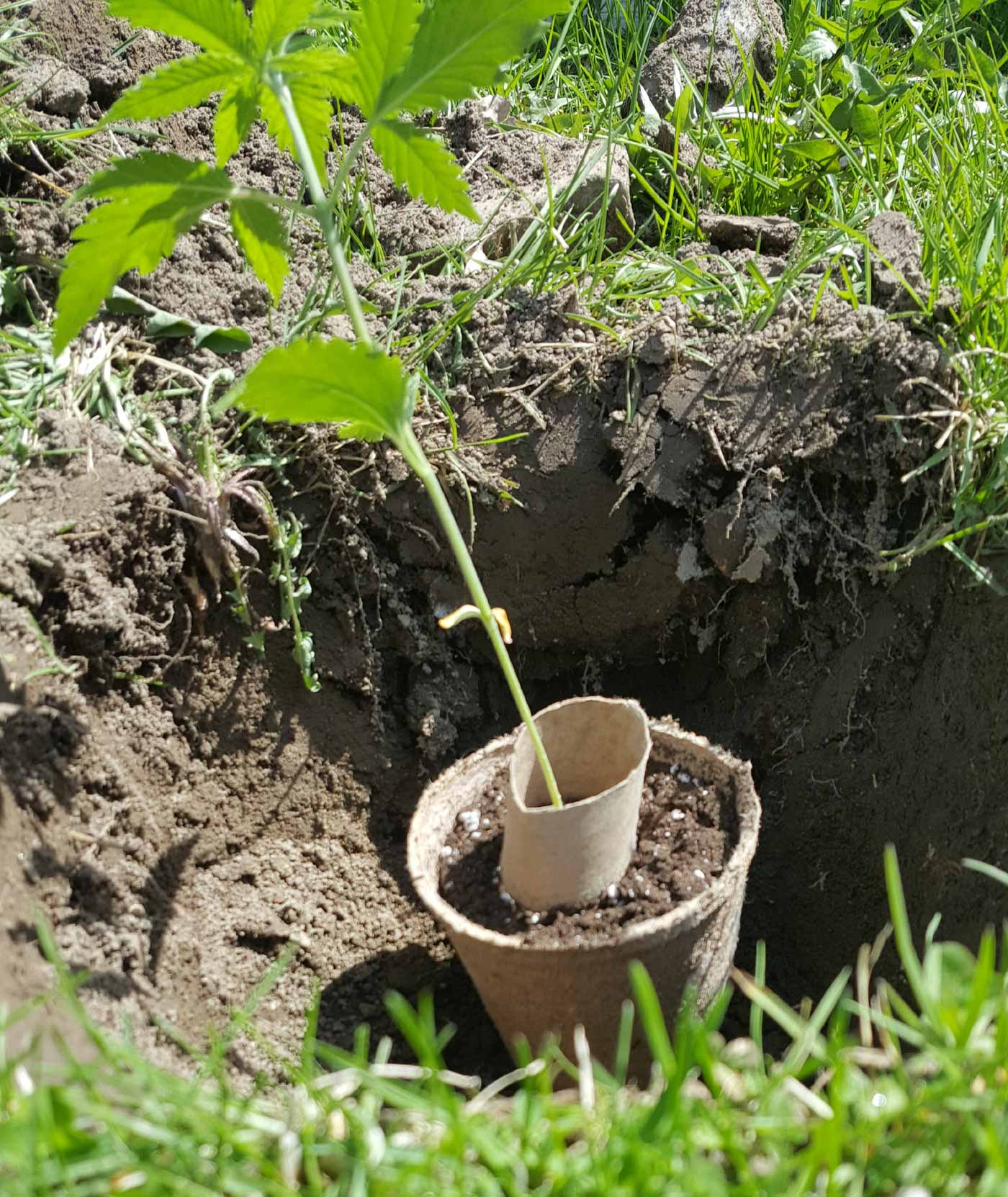
Step 2 - Planting Mediums
There are many different available planting medium options, from soil, to these grow room ball medium, as well as little peat moss squares that you can start plants in. I chose a mixture of basic soil as well as a bit of the original ground that was located in the spot prior to being dug up for the hole. The mixture was about 60/40 (60% new soil, 40% old contents of the hole) and looking back a month down the road, seem to be growing the more sustained plants. The fan leaves on the plants located with the 60/40 mix have a much brighter green and healthier looking leaf than that of the plants in straight soil base.


Step 3 - Peat Moss Container or None
This seems to be more of a matter of ease. People will sometimes opt to leave the peat moss container on the plant, as it dissolves with watering and becomes part of the soil mixture within a short period of time. I was curious if there would be any noticeable difference, but as it turned out there wasn’t. Nothing pointed towards them growing faster or slower, as some grew faster than others while some grew slower.

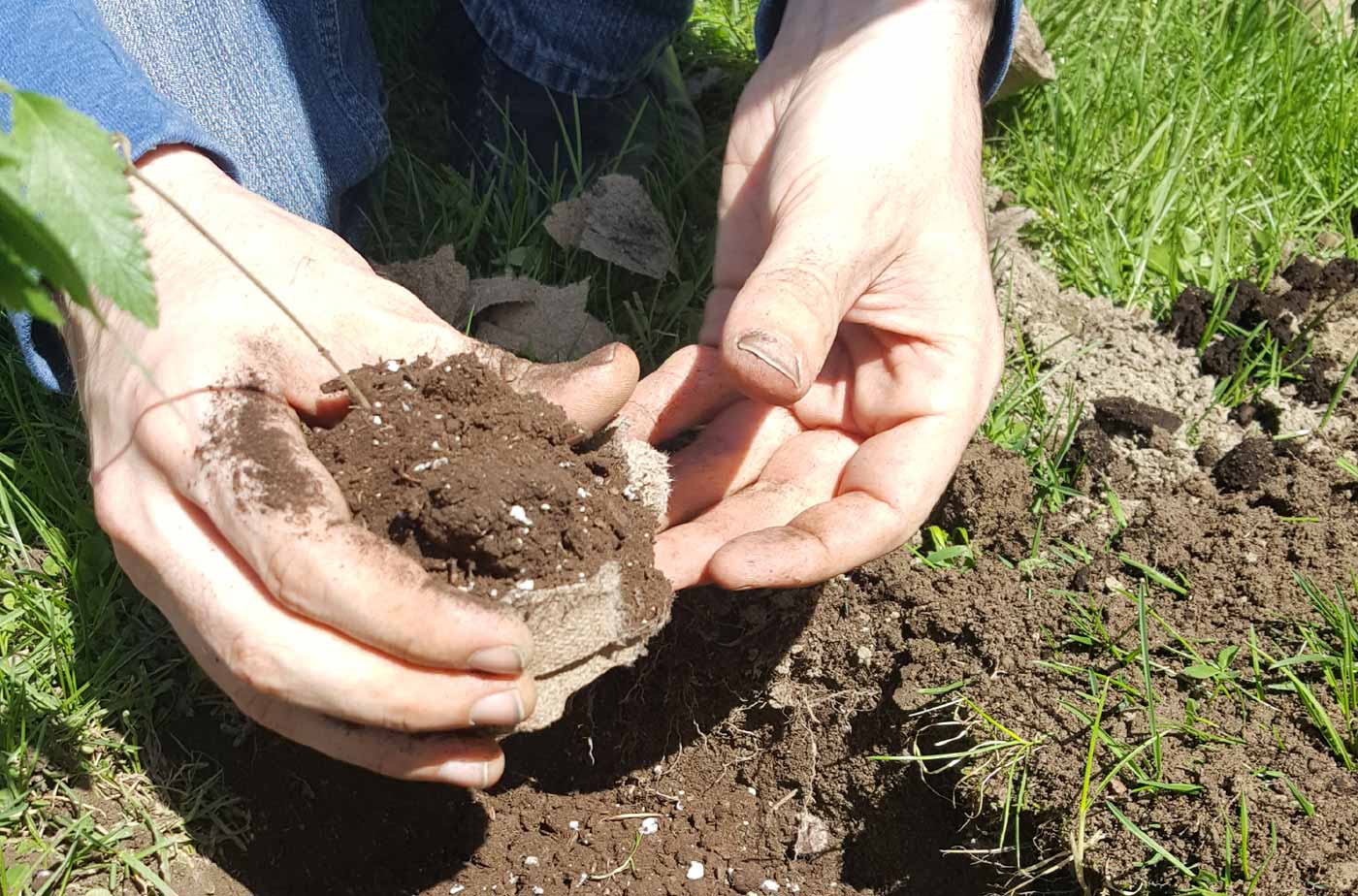
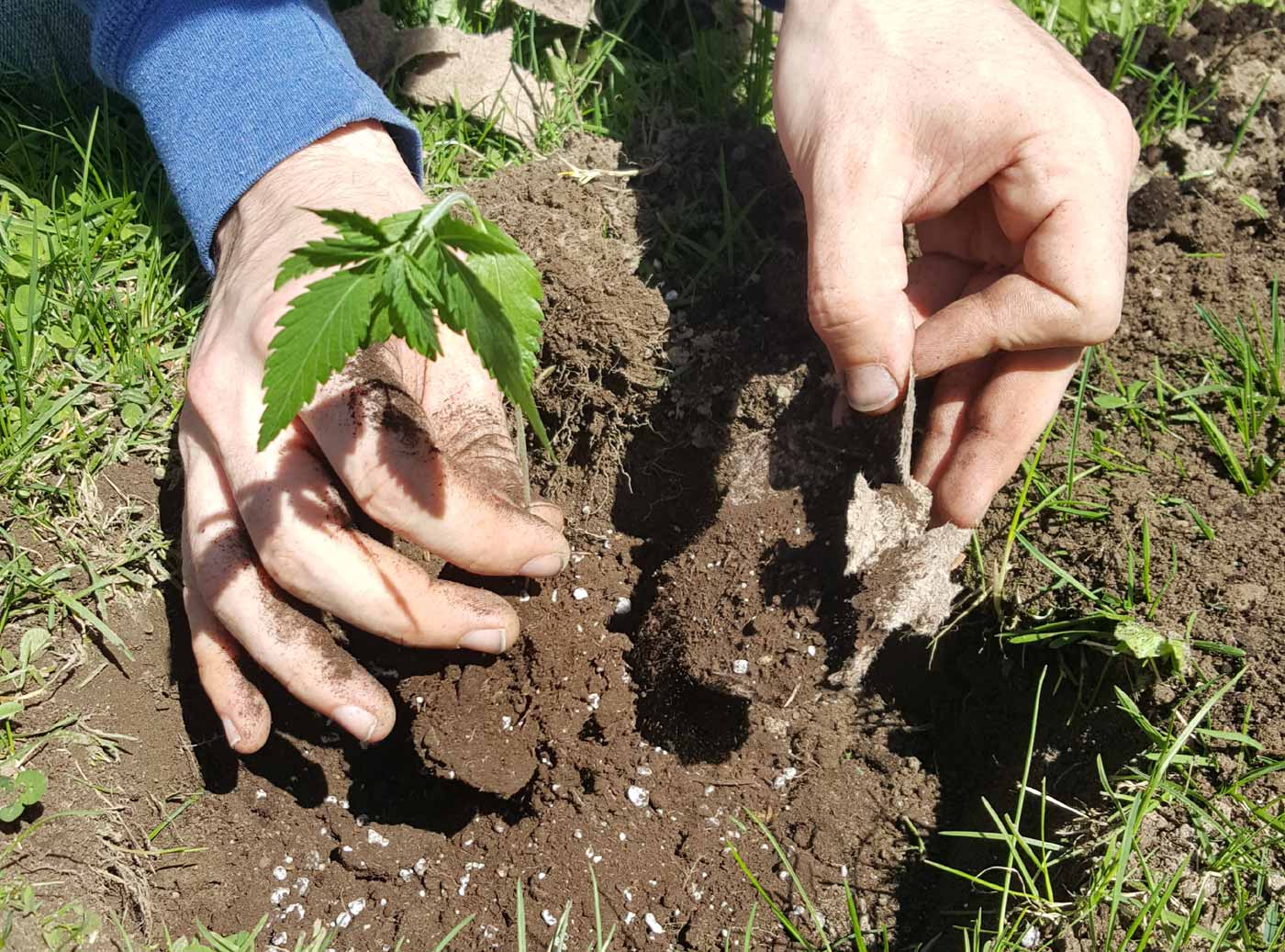
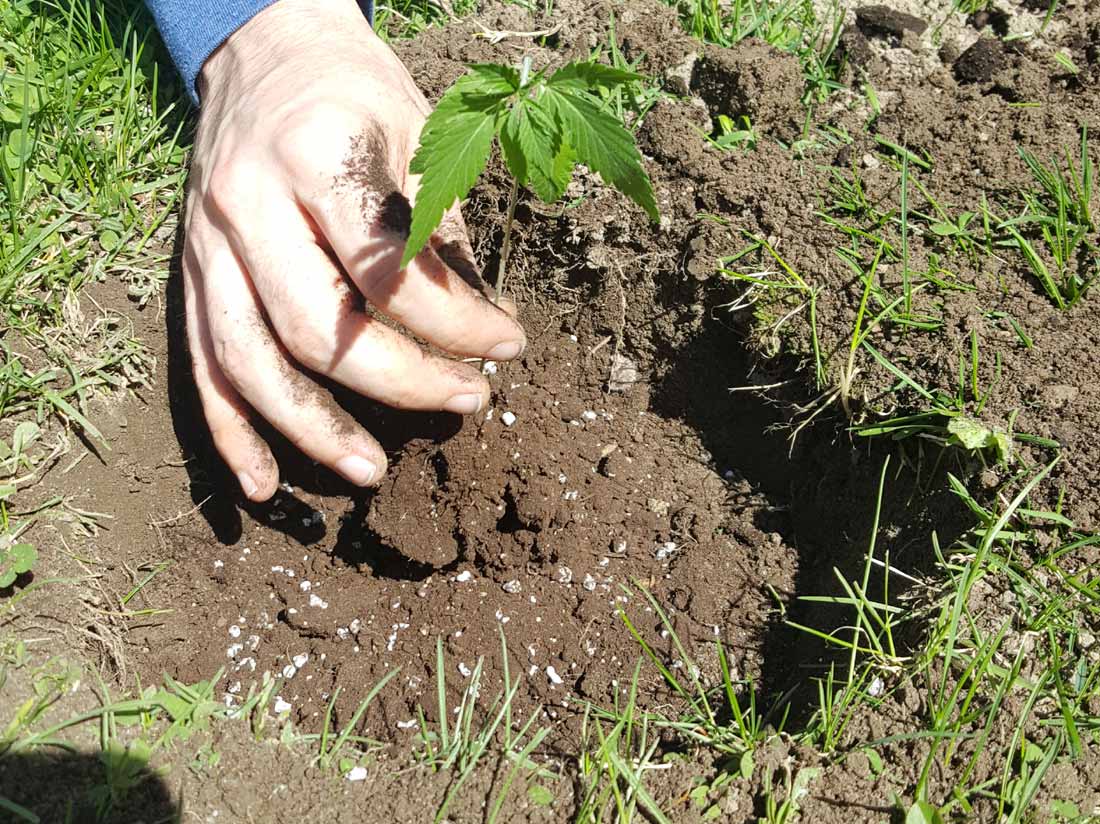
Step 4 – Filling the hole and understanding the root system
When packing the soil, I wasn’t hard on it as to reduce the amount of pressure I was putting on the newly transplanted roots. I softly covered the roots up while holding the stalk of the plant, and feeding the dirt around and onto the root system. This gave the plant itself the support to stay straight during placement and reduce stress of diagonal bending of the stems. The way that the root system will grow, it needs darkness, clearly, but hard packed ground makes for a tougher medium for them to grow through.
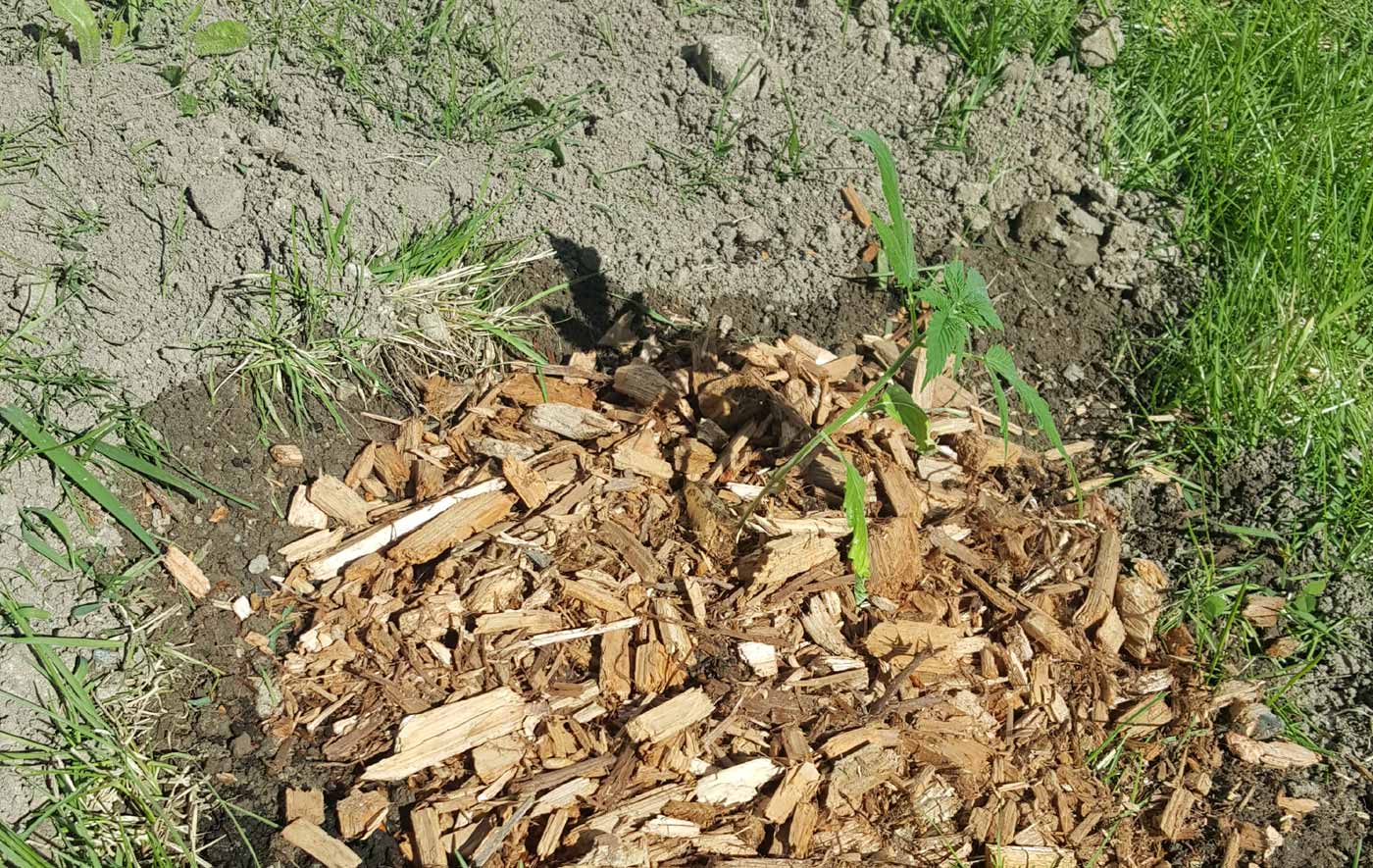
At the early stages of the transplant, it is very important to give the plants as much opportunity for growth as possible and hinder any possible stress. This is where the difference of growth for a clone and seed is evident. Seeds root systems include a taproot. Clones do not. The taproot is almost like a spinal cord for the plant. It will grow vertically while the other roots often grow horizontally to spread near the surface our-ward to collect as much rain and nutrients as possible. This will also give the plant more structure, reaching further into the ground to hold. This allows more strength for high winds, which mixed with the larger root system, allows the plant to grow taller, and therefore more bountiful.
Step 5 – Heavy Watering
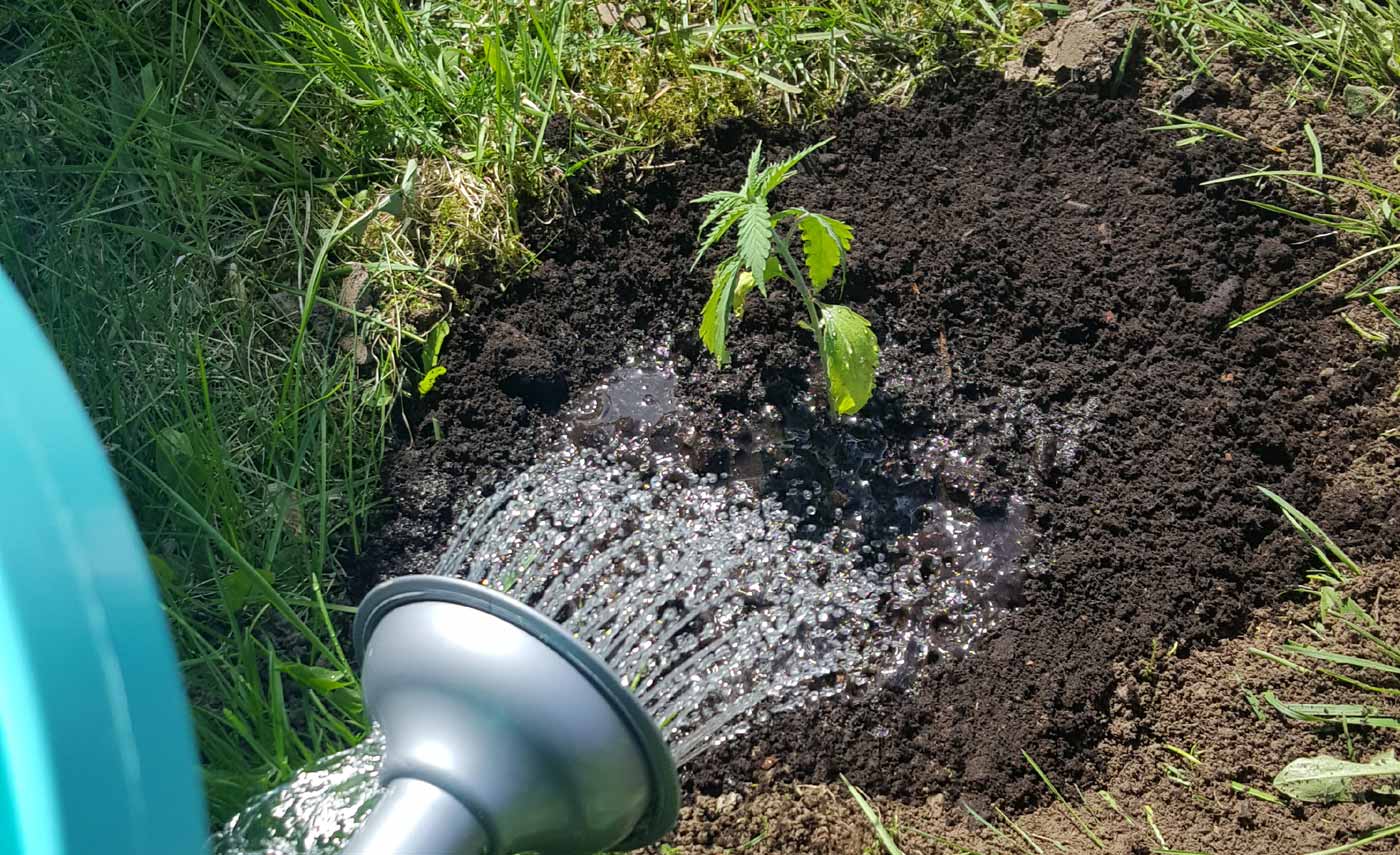
After putting them into the ground, it is of utmost importance to give them their first heavy watering. Not only does this help hydrate them after the stress of a transplant, it will help set the soil medium they were planted in, and can allow you to see if it sets very deeply and requires more soil to be added. The leaves themselves do not need to be watered, and it is of debate that watering the leaves will act as a magnifier for the leaf with the sun. Others claim in the high humidity that the water can help cool the leaves off. It is a matter of choice what to do. For more tips on watering, visit the write up about watering your plants here.
And that’s it! Your cannabis seedlings are now planted and in the ground with nothing to do now but wait and water! The most difficult and maintenance involved stages are done and passed. Now all that’s left is to follow them through the vegetative stage, during which if you’re a planter of seeds that aren’t pre-feminized, you will have to pay attention to the gender when they begin to preflower (follow the link below to understand ways to differentiate the two), and the flowering stage before you are ready for harvest! Links can be found below which help detail how to follow your plants through the next vegetative stage.
Follow this link to learn how to deal with your plant in the vegetative stage!Back to Canadian Outdoor Cannabis